Charles Darwin quick facts
- Charles Darwin was born in Shrewsbury, England, on 12 February 1809.
- He sailed around the world on HMS Beagle from 1831 to 1836.
- He explored the Galápagos Islands for about five weeks in 1835.
- On the Origin of Species was published on 24 November 1859.
- He studied earthworms on and off for 44 years.
Who was Charles Darwin?
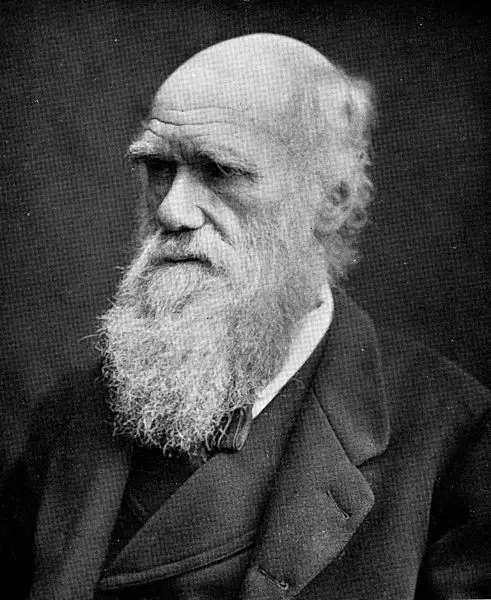
Charles Darwin was an English naturalist, a scientist who studies living things. He is famous for explaining how plants and animals slowly change over many generations, through a process he called natural selection.
His ideas were set out in a book called On the Origin of Species, published in 1859. It changed the way people understand life on Earth.
Darwin’s great adventure was a five-year voyage around the world on a ship called HMS Beagle. What he saw on that journey set him thinking for the rest of his life.
| Charles Darwin at a glance | |
|---|---|
| Born | 12 February 1809, Shrewsbury, England |
| Job | naturalist and scientist |
| Voyage | HMS Beagle, 1831 to 1836 |
| Big idea | evolution by natural selection |
| Famous book | On the Origin of Species (1859) |
| Died | 19 April 1882, aged 73 |
Early life
Charles Darwin was born on 12 February 1809, at his family’s home, The Mount, in Shrewsbury, England, Westminster Abbey says.
He came from a remarkable family. One of his grandfathers, Erasmus Darwin, was a doctor and poet who wrote some early ideas about how living things change. His other grandfather, Josiah Wedgwood, ran a famous pottery business.
Sadly, his mother died in 1817, when Charles was only eight. As a boy, he loved collecting things, and the Darwin Correspondence Project says he helped his older brother, Erasmus, with chemistry experiments in a laboratory at home.
School and university
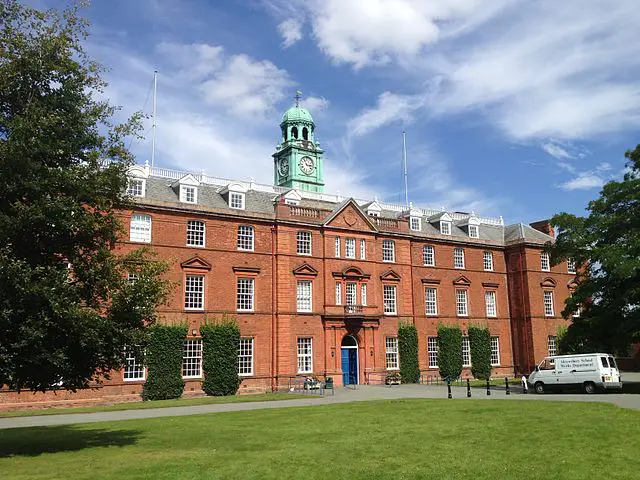
Darwin boarded at Shrewsbury School for seven years, from 1818 to 1825, Darwin Online says. He was not a star pupil. He much preferred exploring outdoors to learning old languages.
In 1825, when he was about 16, he went to Edinburgh University with his brother to study medicine. But he found operations upsetting and most lectures boring. Instead, he collected sea creatures along the shore with a scientist called Robert Grant.
He left Edinburgh without a degree and went to Christ’s College, Cambridge, to train to become a clergyman. There, he became a keen beetle collector.
His teacher and friend at Cambridge was a botany professor called John Stevens Henslow, who also got him interested in rocks and geology. In January 1831, Darwin passed his degree exam, coming 10th out of 178 students.
The voyage of the Beagle
Henslow recommended Darwin for an amazing job: naturalist on a ship called HMS Beagle. The Darwin Correspondence Project says his father objected at first, but then agreed to support him.
Royal Museums Greenwich says the Beagle was a small warship with ten guns, launched in 1820. Its captain was Robert FitzRoy, and its job was to map the coast of South America.
After two false starts, the Beagle set sail from Plymouth on 27 December 1831. Darwin was 22 years old. He lived and worked in a small cabin at the back of the ship, which also held the ship’s library of about 400 books, Darwin Online says.
On the voyage, Darwin collected rocks, fossils, plants and animals, and filled notebooks with what he saw. He explored the Galápagos Islands, in the Pacific Ocean, for about five weeks in September and October 1835.
The Beagle arrived back in England on 2 October 1836. The trip had lasted nearly five years. Darwin later called the voyage “the most important event in my life”, the Darwin Correspondence Project says.
A new idea grows
Many people think Darwin worked out his big idea on the Galápagos Islands. But the Darwin Correspondence Project says his doubts about whether species could change grew after the voyage, while he sorted his notes and specimens.
By the spring of 1837, he was convinced that species do change over time. He began working on his ideas that year. He wrote a short sketch in 1842, a longer essay in 1844, and started a “big book” in May 1856.
His first book, Journal of Researches, told the story of his voyage on the Beagle.
Family life at Down House
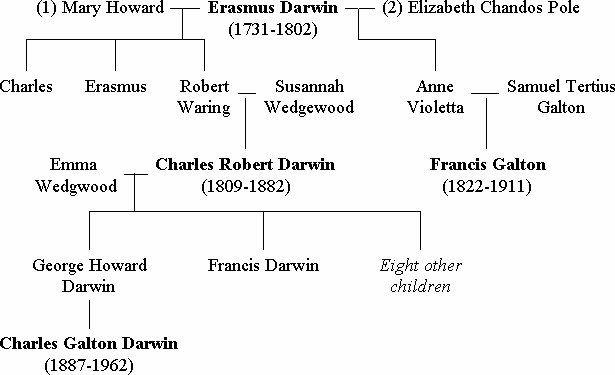
On 29 January 1839, Darwin married his cousin, Emma Wedgwood. The Darwin Correspondence Project says they had ten children, and seven of them lived to grow up.
Two of their children died young. Their daughter Annie died of a fever in 1851, aged 10, and their youngest son, Charles Waring, died of scarlet fever in 1858, aged 18 months.
In 1842, the family moved to Down House, in the village of Downe in Kent, where Darwin lived for the rest of his life. Darwin Online says he walked a path he called the Sandwalk every day, and did experiments in his greenhouse and garden.
Darwin worked at home, which was unusual for fathers at that time. The Darwin Correspondence Project says his children often visited him in his study, and he played billiards and croquet with them.
What is natural selection?

Darwin’s big idea is called evolution by natural selection. Here is how it works.
Living things of the same kind are not all exactly alike. Some are a little faster, some have slightly different colours, and some have beaks a bit better suited to their food.
Those that are better suited to their surroundings are more likely to survive and have young. Their young often inherit the same useful features.
Over many, many generations, these small differences add up. Slowly, living things change, and new species can form. Read more about how living things fit their surroundings in our guide to adaptation in nature.
A letter from Wallace
In June 1858, Darwin received a surprise. The Darwin Correspondence Project says a letter arrived from another naturalist, Alfred Russel Wallace, with an essay describing almost the same idea.
Papers by both men were read to scientists at the Linnean Society in London on 1 July 1858. Neither man was there: Darwin was grieving for his baby son, and Wallace was far away in South-East Asia.
On the Origin of Species
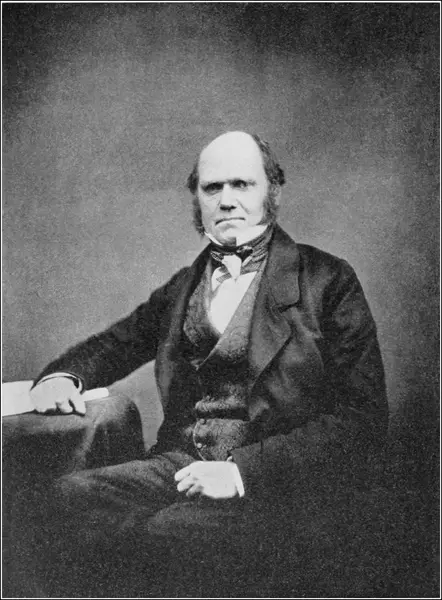
Darwin now hurried to finish a shorter version of his book. The Darwin Correspondence Project says On the Origin of Species was published in London by John Murray on 24 November 1859.
It was a success straight away. The first printing was 1,250 copies, and booksellers ordered even more than that, so a second edition was started at once.
Darwin kept writing. He published The Descent of Man, about human evolution, in 1871. You can read many of his books and letters free online at Darwin Online.
Darwin and the worms
Darwin was fascinated by earthworms. The Darwin Correspondence Project says he studied them on and off for 44 years. His last book, about how worms make soil, came out in 1881 and became a best seller.
He did some funny experiments. To test whether worms could hear, he tried a whistle, shouting, his son’s bassoon and Emma’s piano. The worms did not react at all.
He once wrote to a friend: “My whole soul is absorbed with worms just at present!”
Darwin’s life in dates
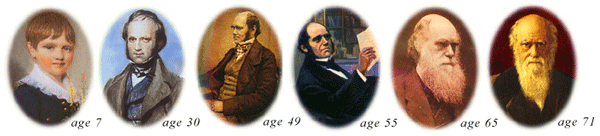
| Year | Event |
|---|---|
| 1809 | born in Shrewsbury, England |
| 1825 | goes to Edinburgh University |
| 1831 | sets sail on HMS Beagle |
| 1835 | explores the Galápagos Islands |
| 1836 | returns to England |
| 1839 | marries Emma Wedgwood |
| 1842 | moves to Down House |
| 1859 | publishes On the Origin of Species |
| 1871 | publishes The Descent of Man |
| 1882 | dies at Down House |
Darwin’s life shows how long great ideas can take. More than 20 years passed between the end of the Beagle voyage and the publication of On the Origin of Species.
Death and burial
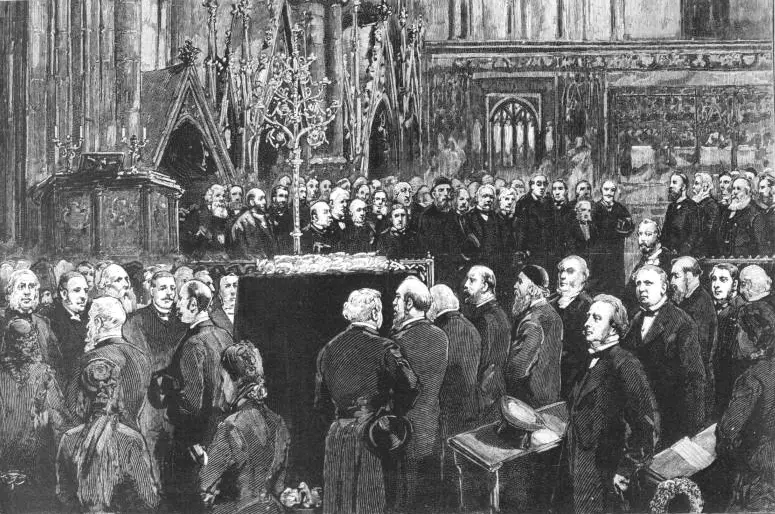
Charles Darwin died at Down House on 19 April 1882, aged 73. His family planned to bury him in the village churchyard at Downe.
But Darwin Online says his friend and neighbour, John Lubbock, a Member of Parliament, arranged for him to be buried in Westminster Abbey in London instead, one of the greatest honours in Britain.
Westminster Abbey says his funeral took place on 26 April 1882. He is buried near the great scientist Sir Isaac Newton, and his pallbearers included Alfred Russel Wallace.
Darwin myths
Survival of the fittest: Darwin did not invent this phrase. The Darwin Correspondence Project says a thinker called Herbert Spencer came up with it in 1864. Darwin later used it only as another way of saying natural selection.
A lone genius: Darwin did not work alone. He wrote to about 2,000 people and relied on many experts to help identify his specimens.
Stealing Wallace’s idea: Darwin had written down his theory in 1842, years before Wallace’s letter. Wallace himself praised how fairly Darwin treated him.
Three things people get wrong
Darwin did not work out evolution on the Galápagos. His ideas grew after the voyage.
Darwin did not coin “survival of the fittest”. Herbert Spencer did, in 1864.
Darwin was not a star pupil. He left medical school without a degree.
Did you know? To test whether worms could hear, Darwin played them a whistle, a bassoon and a piano. They did not react.
Try it
Look closely at a group of the same kind of leaf or seed. Are they all exactly alike? Differences like these are what natural selection works on.
Knowledge check
What was the name of Darwin’s ship?
Show answer
HMS Beagle.
What is natural selection?
Show answer
The process by which living things better suited to their surroundings survive and pass on their features.
Frequently asked questions
Who was Charles Darwin?
Charles Darwin was an English naturalist, born in 1809. He explained how living things change over time through natural selection.
What did Charles Darwin discover?
Darwin explained evolution by natural selection: living things better suited to their surroundings survive and pass on their features, so species slowly change.
What was HMS Beagle?
HMS Beagle was a small navy ship that mapped the coast of South America. Darwin sailed on it as naturalist from 1831 to 1836.
When was On the Origin of Species published?
Darwin’s book On the Origin of Species was published in London on 24 November 1859. The first 1,250 copies sold out quickly.
Did Darwin say survival of the fittest?
The phrase was invented by Herbert Spencer in 1864. Darwin later used it only as another way of saying natural selection.
Where is Charles Darwin buried?
Darwin died in 1882 and is buried in Westminster Abbey in London, near Sir Isaac Newton.
Sources
- Westminster Abbey: Charles Darwin — birth, grandfathers, marriage, death, funeral and grave
- Darwin Online: timeline — school, Edinburgh, the Beagle, the Galápagos, Down House and his death; its pages on Down House, the Beagle library and the funeral were also used
- Darwin Correspondence Project: Darwin and the Beagle voyage — the voyage and his first book; its pages on his childhood, family, Annie and worms were also used
- Darwin Correspondence Project: writing the Origin — how the book developed, Wallace’s letter and the first printing
- Darwin Correspondence Project: fake Darwin — myths about Darwin
- Royal Museums Greenwich: HMS Beagle — the ship, its captain and its mission